Weighing Roof Repair vs. Replacement After a Storm
Storms in the Black Hills can roll in fast with hail, strong wind, and heavy rain. When that happens, your roof often takes the first hit. Once the storm passes, many homeowners are left staring at shingles on the lawn or water stains on the ceiling and wondering: do we repair what we see or replace the whole roof?
That choice affects more than just how your roof looks. It can change how well your home is protected, how comfortable it feels inside, how your insurance claim is handled, and how long you can relax before the next big storm. In this guide, we will walk through a simple checklist you can use to sort out repair vs. replacement, understand what your insurance might cover, and compare contractor bids with confidence.
At RainTite Roofing & Construction, we work on homes and businesses in Rapid City and across the Black Hills, so we see hail, wind, ice, and heavy snow damage all the time. The steps below are the same ones we use to help homeowners make clear, smart decisions about storm damage roof repair or full replacement.
First 48 Hours After a Storm: Safety, Photos, and Quick Checks
Right after a big storm, safety comes first. Do not climb on the roof. Wet shingles, loose debris, and hidden damage can make it very easy to slip. Instead, stay on the ground and watch out for downed power lines, broken glass, and hanging tree branches.
From there, you can do a basic check from safe spots around your home and inside. Here is a simple list:
- Walk around the house and look for missing or curled shingles.
- Check gutters, downspouts, and metal vents for dents from hail.
- Look at siding and window frames for chips, cracks, or dings.
- Check the base of downspouts for piles of shingle granules.
- Inside, look at ceilings, upper walls, and the attic for new stains or damp insulation.
If you see any signs of damage, start taking photos right away. Use your phone to snap clear, timestamped pictures from several angles. Grab close-ups of damaged shingles or siding and wider shots that show your yard and nearby roofs so the storm impact is clear. Short videos can help as well.
It often helps to call a local roofing contractor quickly for a professional inspection before you file a claim. During busy summer storm periods, getting an expert set of eyes on your roof early can save time and confusion once insurance gets involved.
Age and Condition Thresholds: When Repair Becomes Replacement
Not every damaged roof needs to be replaced. Age and condition play a big role in whether focused storm damage roof repair makes sense or if a full replacement is the smarter move.
Different roof materials have different typical lifespans. In our climate, with sun, wind, hail, and snow, those lifespans can be shorter than what you might read in a brochure. Strong storms, large hail, and heavy snow load can speed up wear. A newer roof that has only one or two problem areas is often a good candidate for repair.
Think about these questions:
- How old is the roof compared to its expected life in this climate?
- Has it had leaks or major repairs before this storm?
- Are issues in one small area or spread across many slopes?
- Are shingles still flexible or dry, curled, and brittle?
Warning signs that repeated small repairs may not pay off include soft spots or sagging in the roof deck, shingles that blow off again and again, bare patches where granules are gone, and widespread curling or cracking. Trouble around chimneys, skylights, or vents that keeps coming back is another red flag.
Sometimes, choosing full replacement before the next storm season can be the calmer, long-term choice. A new system can cut down on emergency calls, help with comfort and energy use, and match up better with how long you plan to stay in the home and how you expect your insurance coverage to work for future events.
Mapping the Scope of Damage: Localized Fix or System Overhaul
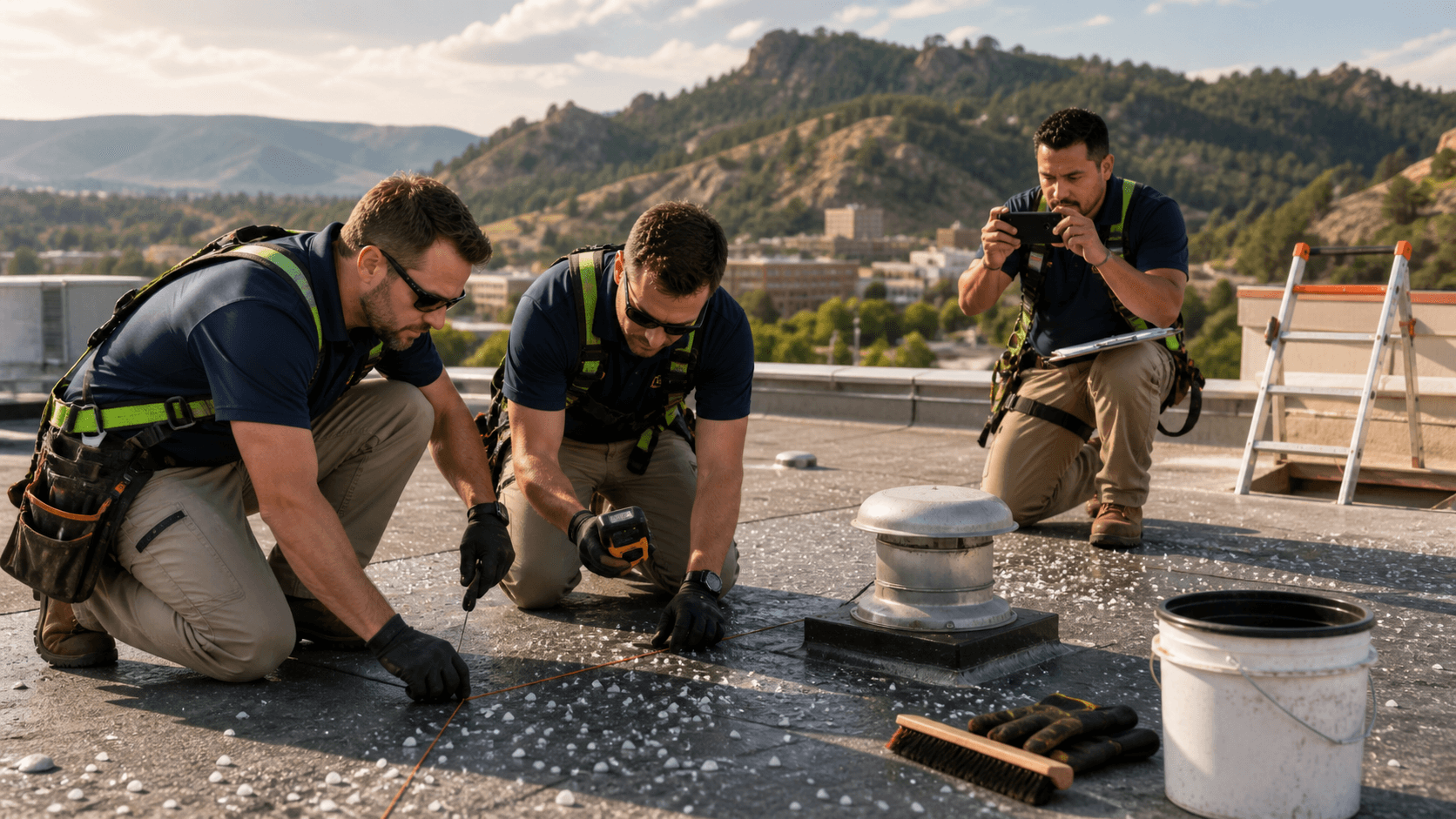
Roof pros look at storm damage in a very methodical way. They do not just check the one spot where you saw a shingle on the ground. They move slope by slope, checking valleys, ridges, hips, and all the penetrations like vents and chimneys. They also look at gutters, skylights, and nearby siding and windows to see the pattern of the storm.
It helps to think of your roof in terms of a simple scope-of-damage map:
- Localized damage: One section or a couple of slopes have missing or bruised shingles, but underlayment and decking are still firm, and there are no interior leaks. This often points toward targeted repair.
- Widespread damage: You see similar hail marks or cracks on many slopes, ridge caps are broken, vents are dented, granules are gone in multiple areas, or there is water inside. This often leans toward full replacement.
Hidden damage is a big deal. Hail can bruise shingles so they look fine from the ground, but the surface is broken. Over time, granules wash away, the asphalt is exposed, and leaks can show up during the next round of heavy rain or snowmelt. Flashing that looks only slightly bent can open gaps later with freeze-thaw cycles.
By getting a clear picture of how big the problem really is now, you reduce the chance of repeat claims, surprise repairs, and worsening interior damage when colder months bring more moisture and temperature swings.
Insurance and Contractor Bids: Compare Smart, Not Just Cheap
Once you know the basic condition and scope of damage, the next step is lining that up with your insurance and contractor options. Start by checking your policy and calling your carrier soon after the storm. You will want to know:
- What is your deductible for wind or hail?
- Is your roof covered at actual cash value or replacement cost?
- Are code-required upgrades included or not?
Actual cash value means the insurer may subtract depreciation based on age and wear, so you get less money for an older roof. Replacement cost coverage is usually based on what it takes to replace with similar materials, subject to your policy terms. Code upgrades, like certain underlayments or ventilation changes, may or may not be included, which can affect whether repair or replacement lines up better with your coverage.
Many homeowners like to have a trusted local roofer do a detailed inspection before the adjuster visit, and sometimes be present for the inspection to help point out storm-related issues. A clear written scope helps the adjuster understand what the storm really did to your home.
When comparing contractor bids, focus on more than the bottom number. Use a simple checklist:
- Confirm licensing, insurance, and local references in Rapid City and nearby communities.
- Ask for a detailed written scope, including materials, underlayment, flashing, ventilation, and ice and water barrier.
- Find out how they handle supplements or code-required changes with the insurance company.
- Be clear on cleanup, debris removal, and how they will protect landscaping and siding.
Watch for red flags, especially in busy storm seasons: high-pressure door knockers, same-day sign-up demands, vague or handwritten estimates with little detail, offers to "cover" or "credit" your deductible, and out-of-town companies with no local track record.
Your Next Step: Local Help to Make the Right Call
Choosing between storm damage roof repair and full replacement can feel like a big guess, but it does not have to be. Start with safety and quick visual checks, document what you see, think about your roof's age and history, and get a clear map of how wide the damage really is. Then line that picture up with your insurance coverage and detailed, apples-to-apples bids from qualified contractors.
A knowledgeable local roofer can walk you through where your roof sits on that repair-versus-replacement line, explain how that fits your policy, and help you plan for coming storm seasons. At RainTite Roofing & Construction, we work with homeowners across Rapid City and the Black Hills to give honest assessments and clear options so you can make a calm, confident decision about the roof that protects your home.
Get Started With Your Project Today
If a recent storm has you worried about your roof, we are ready to inspect the damage and walk you through clear options for repair or replacement. At RainTite Roofing & Construction, our storm damage roof repair services focus on restoring safety, preventing future leaks, and protecting your home's value. Reach out today to schedule a prompt assessment, and we will explain exactly what needs to be done before small issues become costly problems. You can also contact us with any questions or to request an estimate.