Stop Ignoring Those "Tiny" Post-Storm Roof Leaks
Small roof leaks after a hailstorm can be easy to brush off. The storm passed, the sun is out, and from the ground, the roof looks mostly fine. Maybe there is a faint water spot on the ceiling, a tiny drip in the garage, or a damp smell in the attic. It does not feel like an emergency.
That little leak is often the first warning that summer hail did more damage than you can see. Water finds weak spots quietly. Over a few months it can move into your insulation, soak your roof decking, and show up as mold or peeling paint just as colder weather hits the Black Hills. By then, a simple fix can turn into a bigger repair.
Around Rapid City, we see how fast local weather can turn "no big deal" hail damage into serious roof problems. Fast temperature swings, strong sun, late summer storms, and heavy winter snow all push those weak spots harder. Catching those tiny leaks now can protect both your home and your peace of mind.
How Summer Hail Really Damages Your Roof
Hail does not have to be large to harm a roof. Even small stones, when driven by strong wind, can hit shingles hard enough to bruise and weaken them. Most of this damage is hard to see from your yard.
Hail can cause problems like:
- Bruised shingles where the surface feels soft or spongy
- Granule loss that leaves dark, bare spots on shingles
- Cracked seals that let water creep under the shingle edges
- Dented metal on vents, flashing, and valleys
- Loosened or damaged flashing around chimneys and walls
When granules come off, the asphalt underneath is exposed to sun and moisture. That shortens the life of the shingle and makes it more likely to crack, curl, or leak. This is why small hail damage on a roof should never be ignored; size is not the only factor, speed and angle matter too.
Hail also hits more than just shingles. It can:
- Chip or crack skylights
- Bend or dent gutters, changing how water drains
- Damage vents and pipe boots
- Mark and break siding panels
Each of these can become a future entry point for water. On a dry day the roof may look fine, but when the next heavy rain hits, water will follow the path of least resistance and find every weak spot.
Small Leaks Today, Bigger Black Hills Problems Tomorrow
A small leak after a summer storm can feel harmless at first, especially if it only shows up during heavy rain. But the weather around the Black Hills gives that leak plenty of chances to grow.
Here is what often happens over time:
- Late summer rains push more water through the damaged spot
- Temperature swings open up tiny cracks around shingles and flashing
- Early cold snaps start to freeze and thaw that trapped moisture
- Winter snow and ice sit on those weak areas and force water under shingles
Water that slips past the roofing surface soaks into insulation and wood. Wet insulation loses its ability to hold heat and can stay damp for long periods. That can lead to:
- Roof decking that becomes soft or weak
- Ice dams forming around areas of small hail damage on a roof
- Mold on rafters, sheathing, and even inside walls
- Musty smells and poor indoor air quality
Fixing a small problem early often means simple patching and replacing a few damaged shingles or components. Waiting can lead to larger repairs, such as replacing sections of sheathing or repairing interior drywall and trim. In the worst cases, long-term leaks can push a roof much closer to needing full replacement sooner than expected.
Spotting Subtle Signs of Hail and Leak Damage
Not every leak shows up as a steady drip in a bucket. Many start with subtle signs that are easy to miss if you are not looking for them.
Around the house, keep an eye out for:
- Small brown or yellow ceiling stains
- Peeling or bubbling paint along the ceiling or upper walls
- A musty or damp smell in the attic or upper rooms
- Extra shingle granules building up in gutters or at downspout ends
- Dings or tiny impact marks on metal flashing, vents, or gutters
It also helps to remember that storm direction matters. If a storm came in from the west, for example, that side of the roof may show more:
- Bruising or soft spots in shingles
- Cracked corners or lifted shingle edges
- Thinner or bare patches where granules are missing
From the ground, many roofs look fine even when damage is present. DIY inspection is often not enough, especially when:
- The roof is steep or has multiple levels
- The home or building is older
- There is any sign of daylight visible in the attic
- You hear dripping during storms but cannot see the source
Climbing onto a roof can be unsafe, and hail damage can be hard to spot without training. A professional eye can tell the difference between normal wear and issues that can lead to leaks.
Why Late Summer Is the Best Time for a Roof Check
Late summer across the Black Hills is a smart time to think about roof checks. Many of the big hailstorms have already moved through, but the cold season has not yet arrived. That gap gives you a chance to find and fix problems before they are tested by snow and ice.
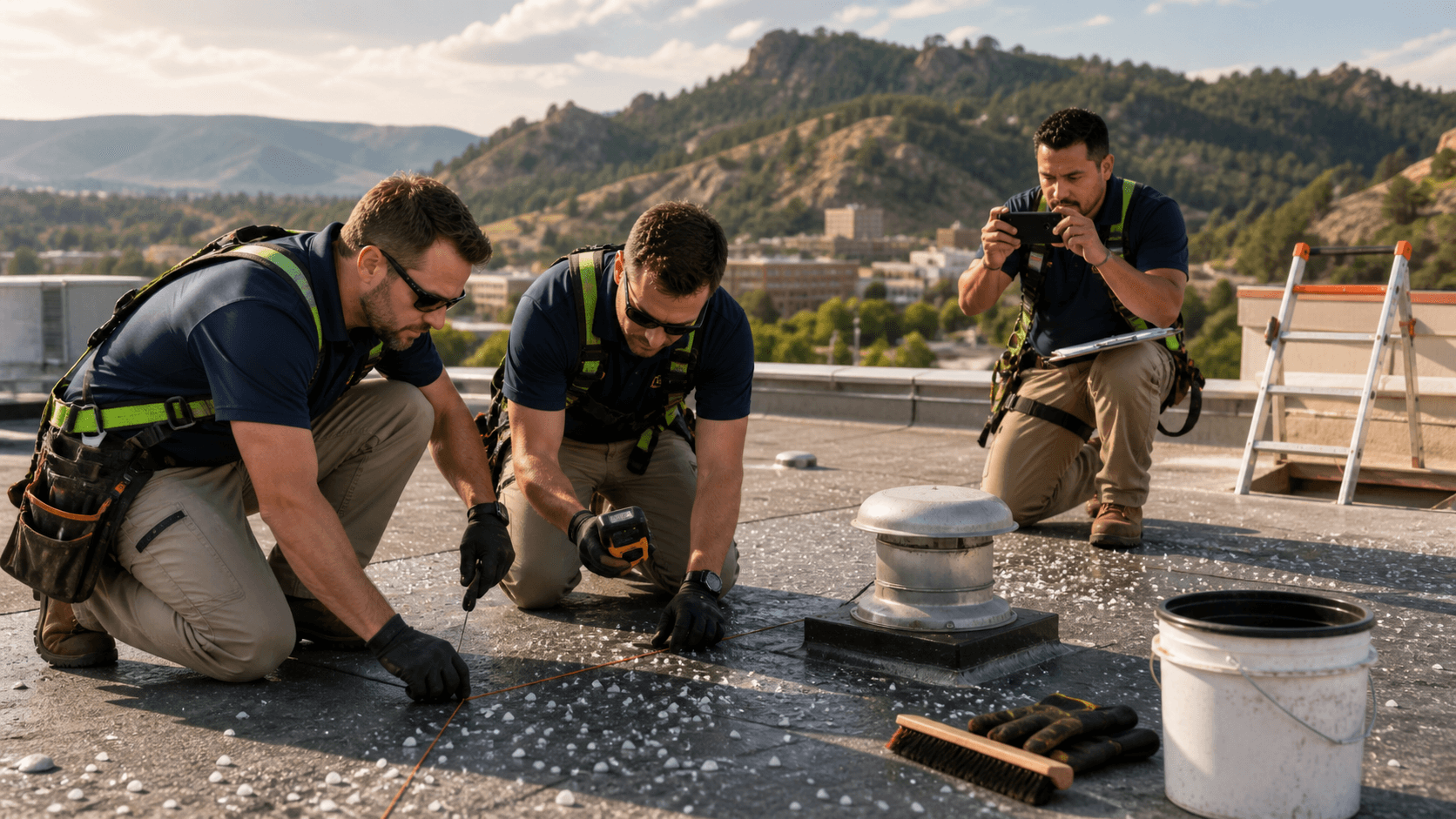
A professional inspection at this time can help by:
- Finding small hail damage on a roof before it spreads
- Checking flashing, vents, skylights, and gutters for hidden issues
- Spotting attic moisture, mold, or soft decking early
- Creating a record of storm-related damage for possible insurance claims
Catching damage while weather is still mild gives more room to plan. There is time to select materials, coordinate with an insurer if needed, and complete repairs before early snow or freezing temps roll into Rapid City. This timing can also avoid the stress of emergency repairs during a cold snap or heavy snow event.
Take Control of Post-Hail Damage Before Winter Hits
Post-hail leaks rarely fix themselves. They spread slowly, often in places you cannot see, until they finally show up as a stain, a draft, or a sag in the ceiling. The earlier they are found, the easier they are to correct.
Having a licensed, local roofing and construction team that knows Rapid City and the Black Hills weather patterns makes a real difference. A careful inspection can check your roof, siding, and windows as one system, then help you understand which repairs should come first and what can wait. That way, when the next season arrives, you know your home or business is ready for what the weather brings.
Protect Your Home From Hidden Hail Damage Today
Even small spots or bruises on shingles can lead to leaks and costly repairs if ignored, so let our experienced team inspect and repair any small hail damage on a roof before it gets worse. At RainTite Roofing & Construction, we carefully assess your roof, document our findings, and recommend only the work you actually need. If you are ready to schedule an inspection or have questions, simply contact us and we will respond promptly.