Protecting Your Roof Before Hail Season Hits
Hail is a normal part of life in the Black Hills, but it is not easy on your roof. Fast summer storms roll over the hills, drop ice, and move on. Your shingles, metal panels, and flashing are left to take the hit, storm after storm, year after year.
Every time hail hits, it can weaken your roofing a little more. Shingles lose protective granules, get bruised, or crack. That can shorten the life of the roof, and in some cases it can even affect certain warranties if damage is not handled the right way. Problems often start small, like a tiny gap around flashing, and grow into leaks, mold, and higher energy bills over time.
Upgrading to hail-resistant roofing before peak storm season is one way to stay ahead of the damage. Instead of patching things up after every big storm, you build a system that is made to take more impact from hail and wind. That can help protect your home or business, control long-term costs, and cut down on future insurance headaches.
How Hail Damages Black Hills Roofs
In Rapid City and across the Black Hills, storms can form quickly on hot afternoons. A dark cloud builds over the hills, wind picks up, and before you know it you are getting pelted with hail. The size of the stones can vary, but even smaller hail can hit hard when it is driven by strong wind.
Hail can damage a roof in several ways:
- Bruised shingles where the impact softens the mat under the surface
- Granule loss on asphalt shingles, leaving bare spots that age faster under sun and weather
- Cracked or punctured shingles that allow water to work down into the layers below
- Dented or bent metal panels, flashing, and gutters
- Damage to vents, skylights, and other roof accessories
From the ground, the roof may still look fine. The shingles are still in place, and you may not see obvious holes. The trouble is that many hail marks are subtle. A shingle can be bruised without a clean break. Granule loss may only show up as a thin, dark patch. Those small issues can turn into leaks that only appear during fall rains or when snow starts to melt.
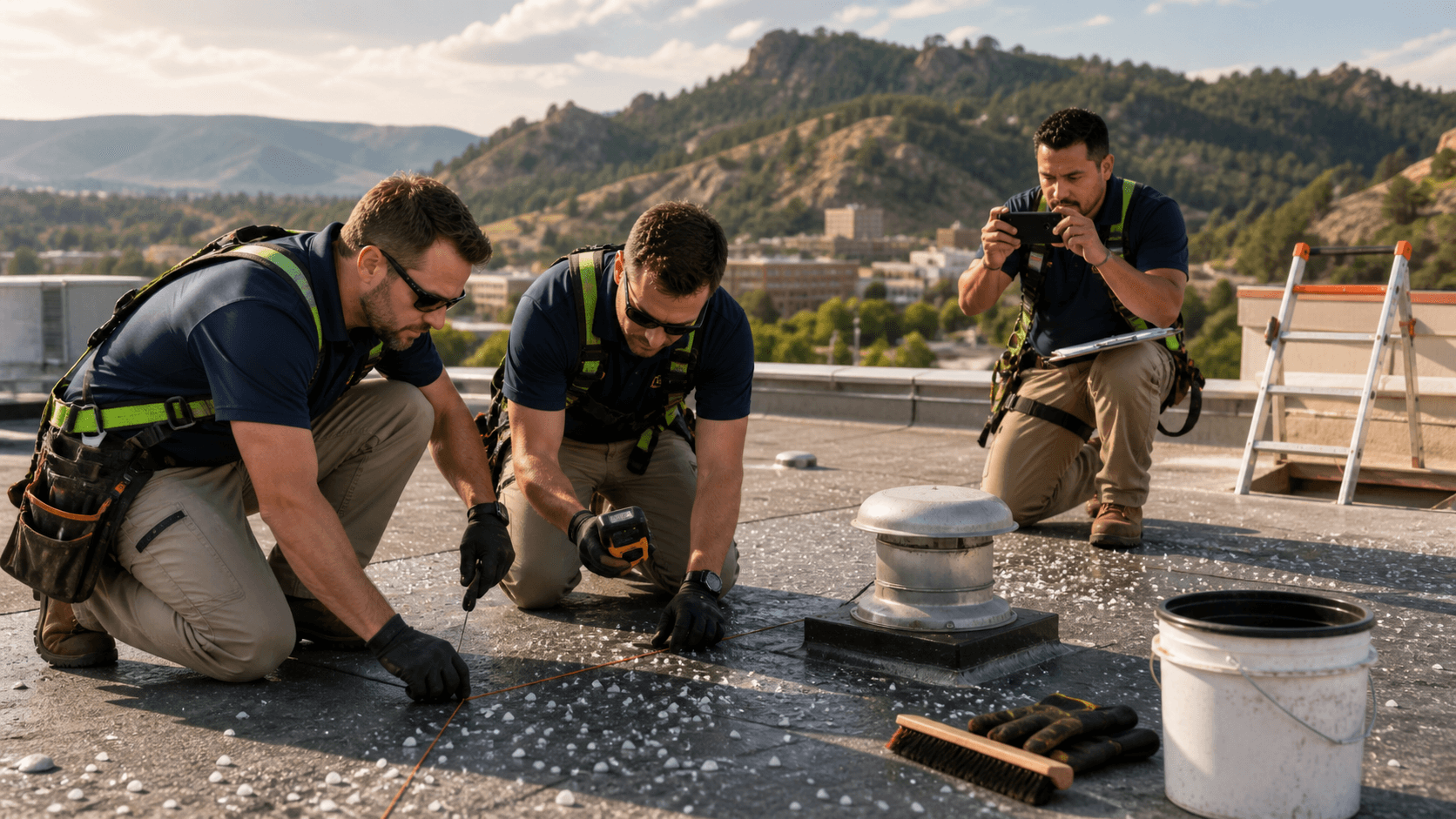
That is why a professional inspection after significant hail is so important. Someone who knows what to look for can spot problem areas, check the soft metals for impact marks, and see whether the roof is still sound or if repairs or replacement should be considered.
What Makes a Roof Truly Hail Resistant
When we talk about hail-resistant roofing, we are talking about materials tested to stand up better to impacts. One common test is UL 2218, which gives impact-resistance ratings from Class 1 to Class 4. In simple terms, Class 3 and Class 4 products are designed to handle bigger impacts from falling-object impacts like hail compared to standard products.
Common roofing options in the Black Hills include:
- Standard asphalt shingles, which can work well but are more likely to bruise or lose granules under heavy hail
- Impact-resistant asphalt shingles, built with stronger mats and binders to help resist cracking and bruising
- Metal roofing, which can shed hail well but may show dents, depending on thickness and style
- Specialty products like certain synthetic or composite shingles that are designed for high impact resistance
Material choice is only part of the story. Construction details matter just as much. A strong hail-resistant system usually includes:
- Quality underlayment to act as a backup layer if the surface is damaged
- Proper ventilation so heat and moisture do not weaken the roof from below
- Installation methods that match local wind and hail conditions, including correct nail patterns and fasteners
- Flashing and accessories that can stand up to both impact and high wind
When materials and installation work together as a system, the roof has a better chance of handling Black Hills hail without serious damage.
Choosing the Right Hail Resistant Roof in the Black Hills
Picking the right hail-resistant roofing for your home or business is a balance. You want protection from hail, but you also care about how the roof looks and what fits your budget. In many parts of Rapid City and surrounding communities, a Class 4 roofing system can make sense because hail is a regular risk, not a rare event.
Some things to think about include:
- Roof pitch: Steeper roofs in the hills may shed hail better but also see stronger winds
- Winter conditions: Snow, ice, and freeze-thaw cycles can add stress, so the system has to work in all seasons
- Wildfire concerns in some areas, which may affect which materials are preferred
- HOA rules that limit colors or materials, which can shape your options
A licensed local contractor that works in the Black Hills every day can evaluate your property as a whole, not just the shingles. That includes checking the structure, current ventilation, drainage, and how your roof handles snow and runoff. From there, they can explain material options, compare impact ratings like UL 2218 Class 3 versus Class 4, and go over product warranties in plain language so you know what is actually covered.
Insurance, Savings, and Long-Term Value
Many property owners in hail-prone areas wonder how hail-resistant roofing fits with insurance. While every insurer is different, some may view upgraded, impact-resistant systems as a lower risk and may offer certain benefits, like possible premium discounts or better insurability in storm-heavy zones.
The long-term value often comes from what you avoid. With a stronger system, you may face:
- Fewer emergency calls after big storms
- Less chance of interior water damage to ceilings, walls, and flooring
- Less mold or mildew from slow, hidden leaks
- Fewer full replacements over the life of the building
Higher-performing materials can cost more at the start, but many owners see that as an investment in fewer surprises later. Good documentation is important here. Keeping records of the materials used, impact-resistance ratings, permits, and installation details can help when you work through an insurance claim after a storm.
Timing also matters. Making upgrades before the most active storm period, instead of right after a major event, can mean less stress, more choice in materials, and more time to plan the project around your schedule.
Schedule a Hail-Readiness Roof Check Before Summer
Before hail starts bouncing off your shingles again, it can help to know exactly how your roof is doing. A hail-readiness roof check from a local roofing professional usually includes:
- Looking for past hail damage that might have been missed
- Checking shingle condition, seams, and high-wear areas
- Inspecting flashing, vents, gutters, and penetrations for weak spots
- Reviewing attic ventilation and any signs of moisture inside
- Talking through options for hail-resistant upgrades if the roof is near the end of its life
RainTite Roofing & Construction is a licensed roofing contractor based in Rapid City, serving homeowners and businesses across the Black Hills. When we perform a pre-summer inspection, our goal is to give you clear, simple information about your roof and realistic options for improving its performance against hail. That way, when the next round of storms rolls through, you can feel more confident that your roof is ready to take the hit.
Get Started With Your Project Today
If your home has been hit by hail or you want to upgrade before the next storm season, we are ready to help you choose the right hail-resistant roofing for long-lasting protection. At RainTite Roofing & Construction, we inspect your roof, explain your options clearly, and recommend solutions that fit your budget. Reach out today to schedule an appointment or ask questions, and we will walk you through every step. To get started, simply contact us and we will follow up promptly.