Protect Your Roof After Spring Hail Smashes the Black Hills
A roof inspection after a hailstorm is one of the most important things you can do to protect your home or business. In the Black Hills, strong spring and early summer storms can pound Rapid City and nearby towns with hail right before the hottest stretch of the year. That ice may only last a few minutes, but it can leave your roof weak and open to leaks.
The trouble is, many roof problems do not show up right away. A cracked shingle or dented vent can look minor at first, then turn into a leak during the next heavy rain. Water can creep into your attic, soak insulation, stain ceilings, and feed mold before you even see a drip.
So when the storm passes, what is the best way to check for roof damage, drone inspection or an in-person inspection from a licensed roofing contractor like our team at RainTite Roofing & Construction? Let us walk through what each method finds, where each one falls short, and how to choose the right approach for your property.
What Drone Roof Inspections Do Best After Hail
After a hailstorm, speed and safety matter. Roofs can be slick, unstable, and full of loose debris. This is where a drone can really help.
Some of the biggest strengths of drone inspections are:
- Fast coverage of large or steep roofs
- Keeping people off damaged, risky surfaces
- Easy viewing of hard-to-reach spots from the ground
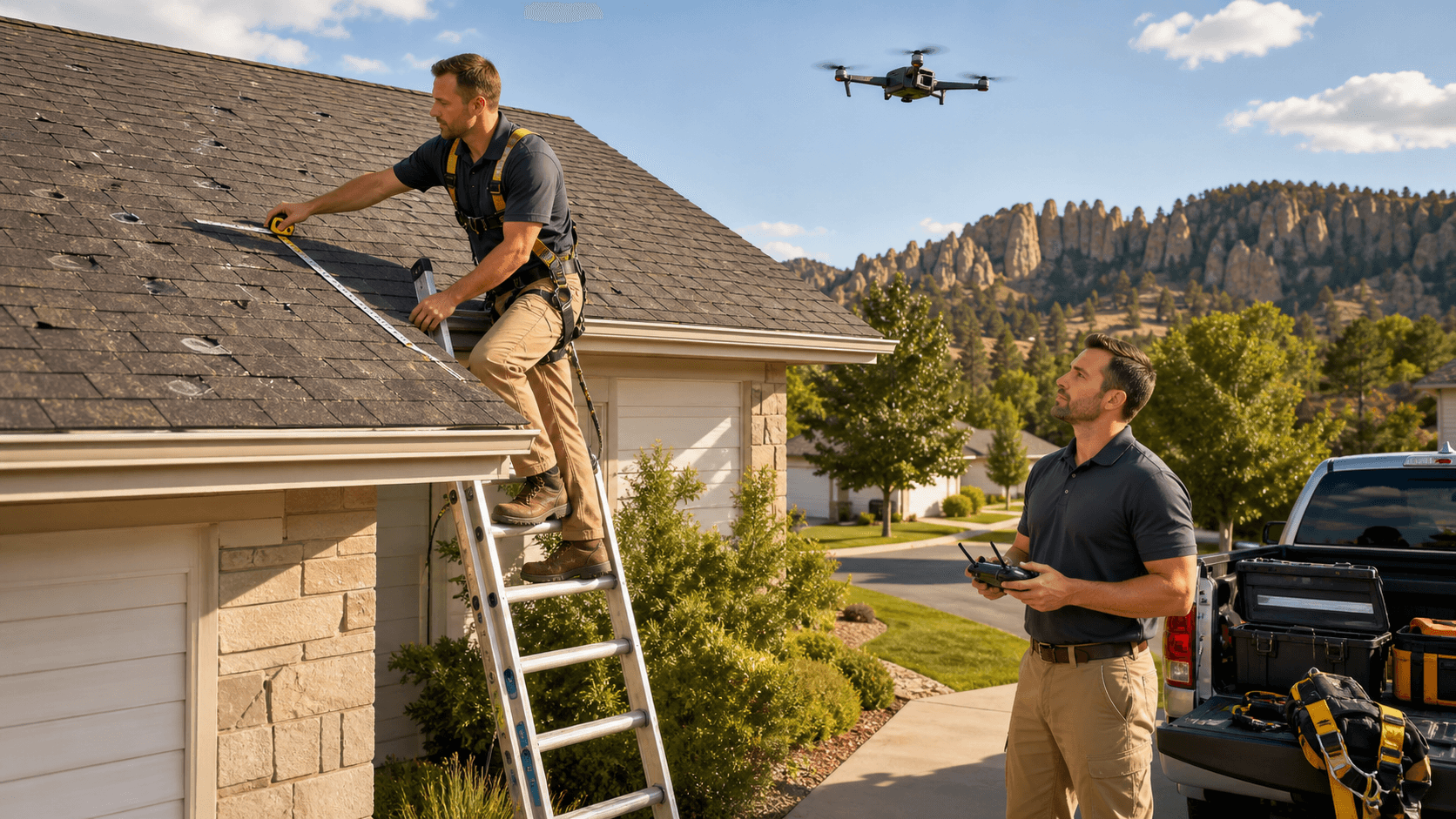
On large commercial buildings, churches, and multi-family properties, just getting to the roof can be a challenge. A drone lets us scan the whole roof quickly, including areas that would normally need special ladders or equipment.
High-resolution photos and video make it easier to see:
- Missing or badly broken shingles
- Obvious impact marks from hail
- Dented metal panels, vents, and flashing
- Damaged or clogged gutters and downspouts
Because the images are time-stamped, they are also very useful for insurance claims. You get a clear record of what the roof looked like right after the storm, and again after repairs are finished.
Drones are especially helpful for:
- Initial post-storm triage when many roofs need to be checked fast
- Documenting before and after views of repairs or replacements
- Checking dangerous or hard-to-reach roof sections without putting people at risk
In our area, many reputable roofing companies, including our crew at RainTite, use drones as part of a larger evaluation process. The drone is a powerful tool, but it is not the only one we rely on.
What Only an In-Person Roof Inspection Can Reveal
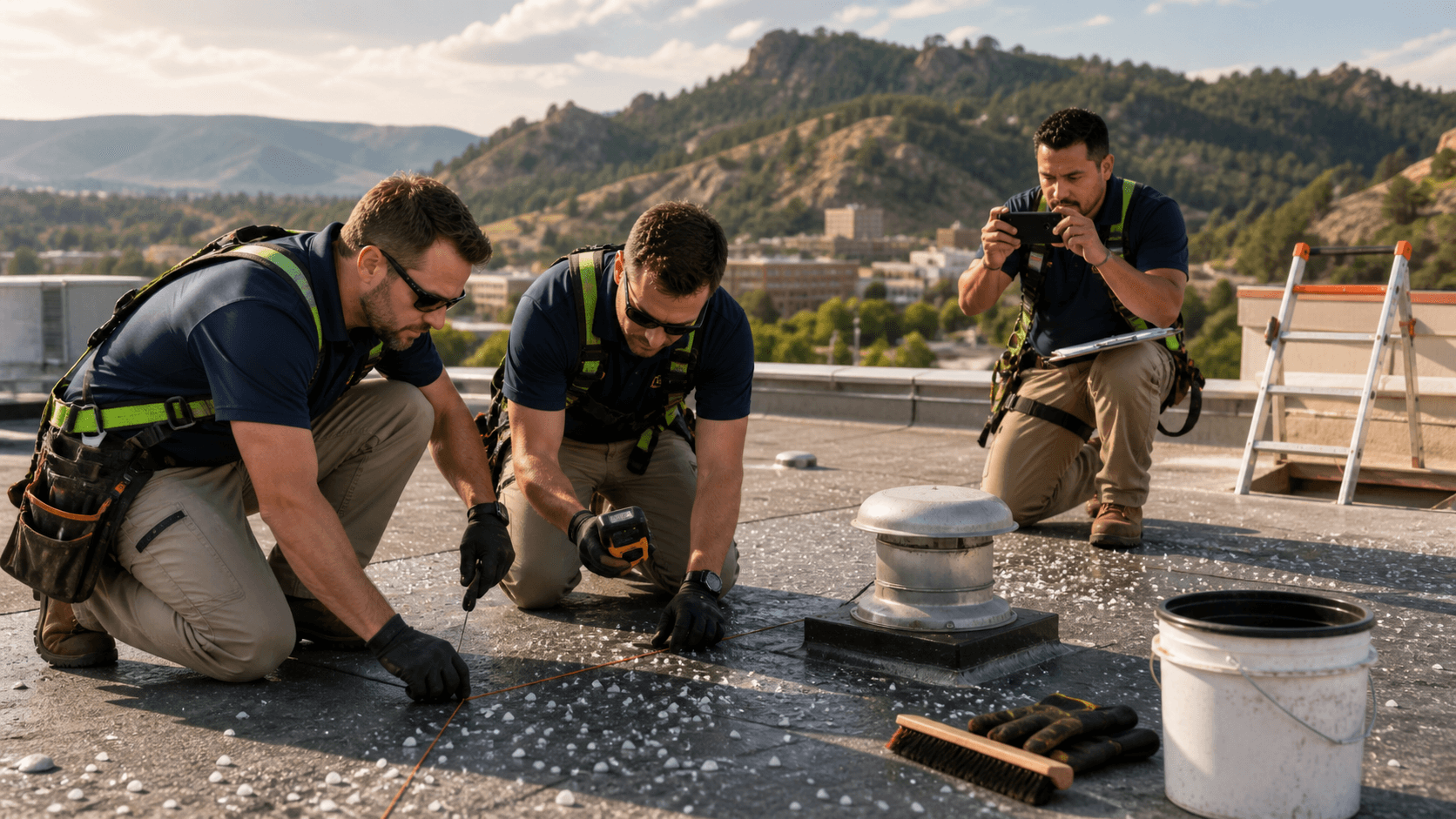
Even with great drone images, some problems only show up when a licensed roofer is actually on the roof and inside the home or building. A camera in the sky cannot feel, tap, or pull on materials to test them.
During an in-person inspection, we can:
- Feel for soft spots or spongy decking
- Check for subtle granule loss that thins out shingles
- Spot small cracks or punctures that blend into the roof color
We also spend time up close around the most leak-prone areas, such as:
- Flashing around chimneys and skylights
- Plumbing vents and roof vents
- Where the roof meets siding or walls
- Around windows and trim near rooflines
Even small gaps near these features can let water in after hail has loosened seals or bent metal.
Another major part of an in-person inspection is inside the attic and interior. A drone cannot show you:
- Moisture on rafters or insulation
- Dark rings or stains on the underside of the roof deck
- Daylight peeking through nail holes or cracks
- Musty smells that point to ongoing leaks or poor ventilation
Hail damage can work together with existing ventilation problems and trap moisture inside your roof system. That kind of issue needs eyes and hands inside the structure, not just pictures from above.
Licensed contractors who work in Rapid City and across the Black Hills also understand local building codes, common construction styles in the area, and typical expectations from roof manufacturers and insurance carriers. That knowledge helps guide whether we suggest a repair, a partial replacement, or a full roof replacement after a severe hailstorm.
Drone vs. in-Person Roof Inspections After a Hailstorm
So how do the two methods stack up side by side after a hailstorm hits your property?
Think of a drone inspection as the big-picture checklist. It is great at finding:
- Missing or displaced shingles
- Large impact marks and dents
- Bent gutters, downspouts, and visible metal damage
- Overall condition of each roof plane
An in-person inspection gives you the close-up checklist. It detects:
- Granule loss, bruised shingles, and hairline cracks
- Soft decking or loose fasteners under the surface
- Early signs of water intrusion into the attic or ceilings
- Problems around vents, chimneys, skylights, and transitions
Relying only on drone footage can leave small but serious issues hidden. Those small cracks or soft spots might not leak right away, but months later, after more storms and hot sun, they can turn into major water damage.
Each method also has limits you should understand:
Drone limits:
- Cannot fly safely in high winds, heavy rain, or lightning
- Must follow airspace rules and local regulations
- Struggles to see under overhangs, under panels, or deep in valleys
- May miss very small defects that blend into the surface
In-person limits:
- Takes more time and planning
- Safety concerns on very steep or badly damaged roofs
- May require more equipment and a more detailed visit
In many cases, the best choice for a roof inspection after a hailstorm is a hybrid strategy. Use a drone for fast screening and documentation right after the storm, especially when access is risky. Then follow up with a full on-roof and attic inspection when there are signs of damage or when the drone images raise questions.
Black Hills homeowners and business owners get the clearest picture when both tools are used together by a qualified local contractor who understands our weather and building types.
When to Call for Drone, in-Person, or Both in the Black Hills
The right inspection method can change depending on your property and what you are seeing after the storm.
A drone-first inspection often makes sense for:
- Large commercial roofs or flat roofs
- Churches and tall multi-story homes
- Neighborhood-wide hail events when many properties need quick checks
- Situations where the roof is still wet, slick, or full of debris
This approach lets a contractor spot which roofs need tarping or urgent attention without sending people onto every single structure right away.
An in-person inspection should never be skipped when you notice:
- Active leaks or fresh ceiling stains
- Loose or broken shingles in your yard
- Dents in gutters, downspouts, siding, or window frames
- Pieces of shingles or granules piling up near downspouts
Older roofs that are already near the end of their lifespan also deserve a closer look. Even moderate hail can push a tired roof past its limit.
Seasonal timing matters in Rapid City and across the Black Hills. Early summer hail can hit before months of sun and more storms. Getting a careful roof inspection after a hailstorm helps catch small issues before repeated heat and weather make them worse. It is also smart to have roofs re-checked after any major hail event, even if a quick look from the yard does not show obvious problems. Many hail-related issues are subtle at first, and catching them early can prevent bigger headaches later.
Protect Your Home With a Post-Storm Roof Check Today
If your home was hit by hail, do not wait for small problems to turn into expensive repairs. At RainTite Roofing & Construction, we provide a thorough roof inspection after a hail storm so you know exactly what your roof needs. Our team will walk you through any damage we find and recommend clear next steps that fit your situation. Reach out through our contact page to schedule your inspection and restore your peace of mind.