Stop Hidden Roof Leaks After Hail Hits Rapid City
Flat roof hail damage is easy to miss, especially right after a storm. The roof might look fine from the street, but weeks later you notice a stain on the ceiling or a musty smell in a back room. By the time water shows up inside, the damage on top has usually spread.
In Rapid City and the Black Hills, hail often comes with late-summer storms. After that, we get bright sun, strong wind, and big swings in temperature. All of that puts extra stress on a damaged flat roof. In this article, we will walk through how hail affects flat roofs, what you can safely check yourself, how a professional inspection works, and what repair options are common so you can act before small problems turn into big leaks.
Why Flat Roofs React Differently to Hail
Flat roofs do not shed water the way pitched roofs do. Instead of water rolling straight off, it tends to spread out and move slowly toward drains or scuppers. If those drains are clogged, water can pool and sit on the surface. When hail has already loosened or bruised that surface, standing water can work its way into weak spots.
Common flat roofing materials include:
- EPDM rubber membranes
- TPO and PVC single-ply membranes
- Modified bitumen rolls
- Built-up roofs made of layers of felt and asphalt
Each type shows hail damage in its own way. On EPDM, hail can cause soft bruises, hairline cracks, or small punctures that stretch over time. On TPO or PVC, hail can leave surface cracks, star-shaped fractures, or damage along seams and welds. Modified bitumen and built-up roofs can show crushed granules, bare spots, or blisters that open up later.
In the Rapid City area, flat roofs face a lot of stress after a storm. Some of the unique local risks are:
- Strong sun that dries and shrinks damaged areas
- Temperature swings that make seams expand and contract
- Snow and ice that sit on already weakened spots
- Wind that lifts loose edges or flashing
Hail might only leave a mark at first, but the weather that follows can turn that mark into a leak.
Spotting Flat Roof Hail Damage From Ground Level
You can learn a lot about flat roof hail damage without ever climbing a ladder. The first step is a safe visual check from the ground or from upper windows.
Here are some places to look outside:
- Metal gutters and downspouts, especially the front faces
- Metal flashing along the roof edge
- AC units, vents, and metal caps
- Siding or trim right under roof edges
If those items have fresh dents, cracks, or chipped paint, there is a good chance the roof took a hit too. You may also spot loose pieces of roofing at the corners or see debris piling up where water comes off the roof.
Inside your home, pay attention over the days and weeks after a hailstorm. Warning signs often show up slowly:
- Brown or yellow stains on ceilings or high walls
- Bubbling or peeling paint near the top corners
- New hairline cracks in drywall that follow ceiling lines
- Musty or damp smells in rooms under the flat roof
If you notice any of these, it is a clue that water may be finding a path through hail-damaged areas above.
Climbing onto a flat roof is not a good idea for most homeowners. Fresh hail can make the surface slick, and soft spots may not be visible until you step on them. Walking in the wrong place can:
- Turn a bruise into a full puncture
- Tear seams that were only slightly opened
- Damage protective coatings
- Void some manufacturer warranties
For your safety and to protect the roof, it is better to stay off and let a licensed roofer do the close-up work.
Professional Hail Assessments for Flat Roofs
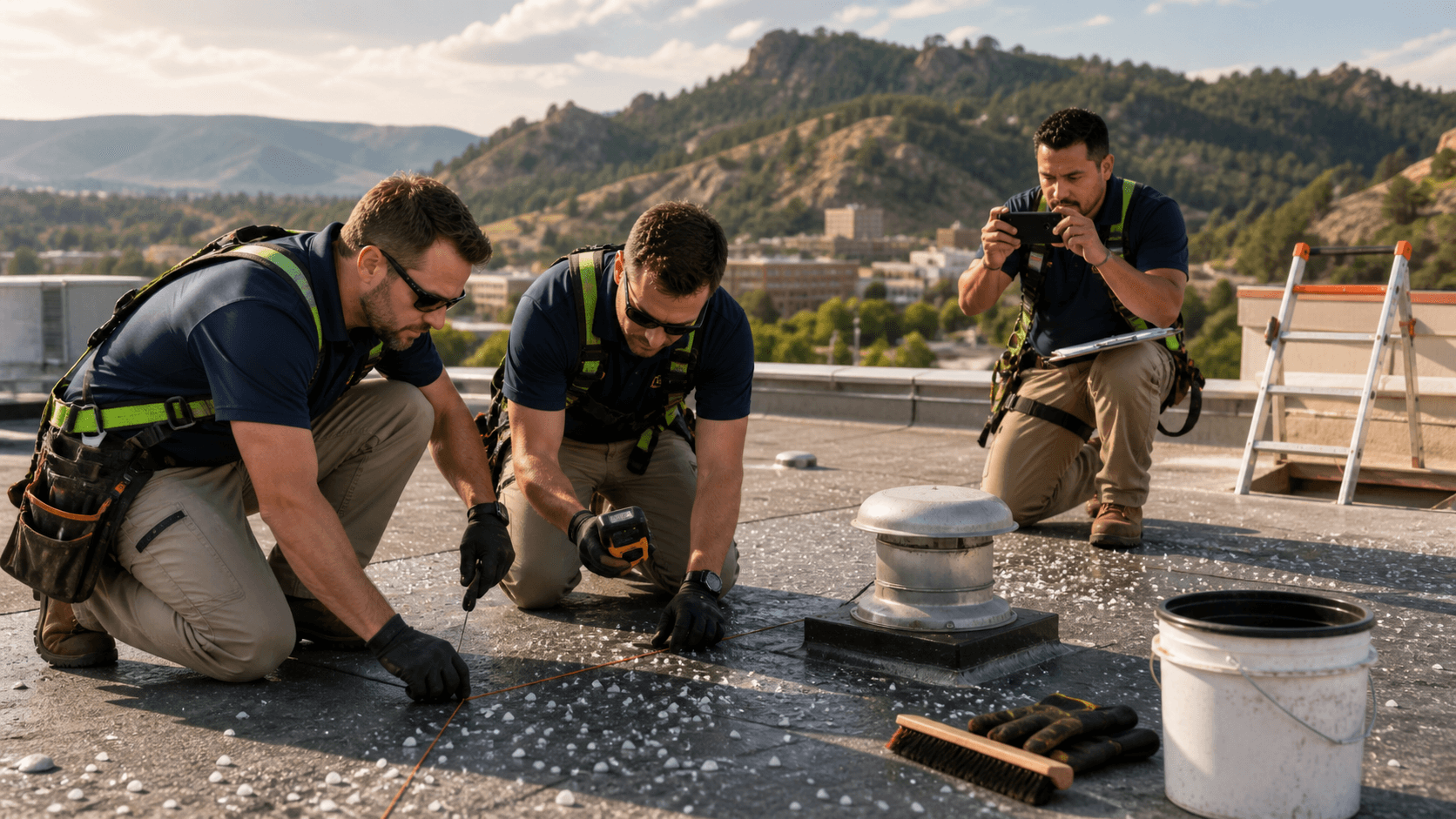
A professional hail inspection on a flat roof is much more than a quick look. When we inspect a flat roof after a storm, we move slowly and check every part of the system.
A licensed roofer will typically check:
- Bruising, punctures, and small tears in the membrane
- Loose or failed seams, laps, and flashing details
- Areas of ponding water or signs that water has been sitting
- Granule loss on modified bitumen or built-up roofs
- Damage around rooftop equipment and penetrations
We also pay attention to drainage. Hail can clog scuppers and drains with leaves and roof material. If water cannot get off the roof, even minor damage can get worse quickly.
Documenting what we find is important for insurance. A good inspection includes:
- Clear photos of damaged areas and surrounding roof
- Measurements of impact zones and affected sections
- Notes on roof type, age, and condition before the storm, if known
Insurance policies often have time limits for reporting hail damage. In a place like Rapid City, where more storms can follow, it is smart to have the roof checked within a few days whenever possible. Early documentation helps support a claim and helps prevent new storms from compounding old damage.
Repair Options When Hail Damages a Flat Roof
Not all flat roof hail damage means a full replacement. Sometimes, targeted repairs can keep the roof performing well.
Spot repairs might be enough when:
- Damage is limited to a small, defined area
- Membrane seams and flashing are mostly intact
- The roof is still within its service life
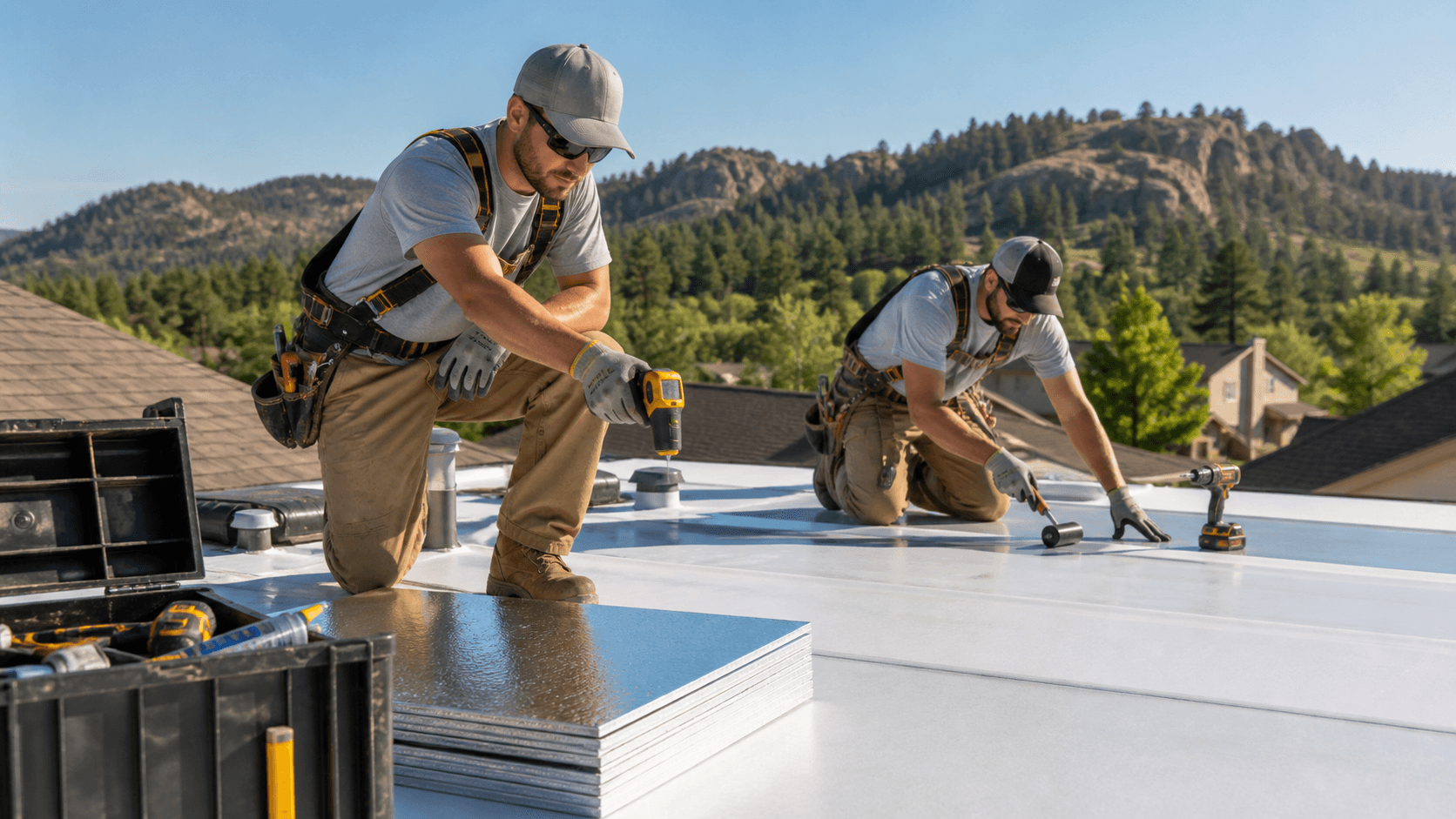
In these cases, a roofer may:
- Patch small holes or cracks in EPDM with compatible rubber patches
- Heat-weld new sections over damaged TPO or PVC areas
- Torch or cold-apply new modified bitumen patches over bruised spots
- Rework or seal flashing details where hail has opened gaps
Full replacement is usually considered when:
- Hail has affected a large portion of the roof
- Multiple seams, corners, and details show damage
- The existing roof is already near the end of its life
When replacement is needed, it can be a good time to add upgrades that help reduce future hail damage, such as:
- Impact-resistant roofing materials rated for stormy areas
- Better drainage layout, including extra drains or improved slopes
- Insulation improvements that help control temperature swings
These changes can make the roof more forgiving when the next hailstorm rolls through the Black Hills.
Schedule a Post-Hail Flat Roof Check Before Fall Rains
In Rapid City, hail and heavy rain often come close together, with early snow not far behind. That window between summer storms and cooler weather is the best time to find and fix flat roof hail damage. A dry, clear day makes inspection and repair work safer and more effective.
Here is a simple checklist for homeowners after a hailstorm:
- Take photos of your yard, siding, and any visible metal damage
- Walk through your home and look for new stains, cracks, or smells
- Note the date and time of the storm for your records
- Review your insurance policy for hail and roof damage terms
- Arrange a licensed flat roof inspection before the next big rain
By acting early and understanding how flat roof hail damage works, you can protect your home, avoid surprise leaks, and keep your roof ready for the changing weather in the Black Hills area. RainTite Roofing & Construction is here to provide thorough flat roof inspections, clear repair or replacement guidance, and professional support with hail damage concerns for homes in Rapid City and nearby communities.
Protect Your Flat Roof From Hidden Hail Damage Today
If you suspect flat roof hail damage on your commercial building, now is the time to schedule a professional inspection before minor issues turn into costly leaks. At RainTite Roofing & Construction, we carefully assess your roof, document what we find, and explain your best repair or replacement options in clear terms. We work around your operations to minimize disruption while restoring your roof's protection and performance. Reach out through our contact page to set up your inspection and get a straightforward plan for your next steps.