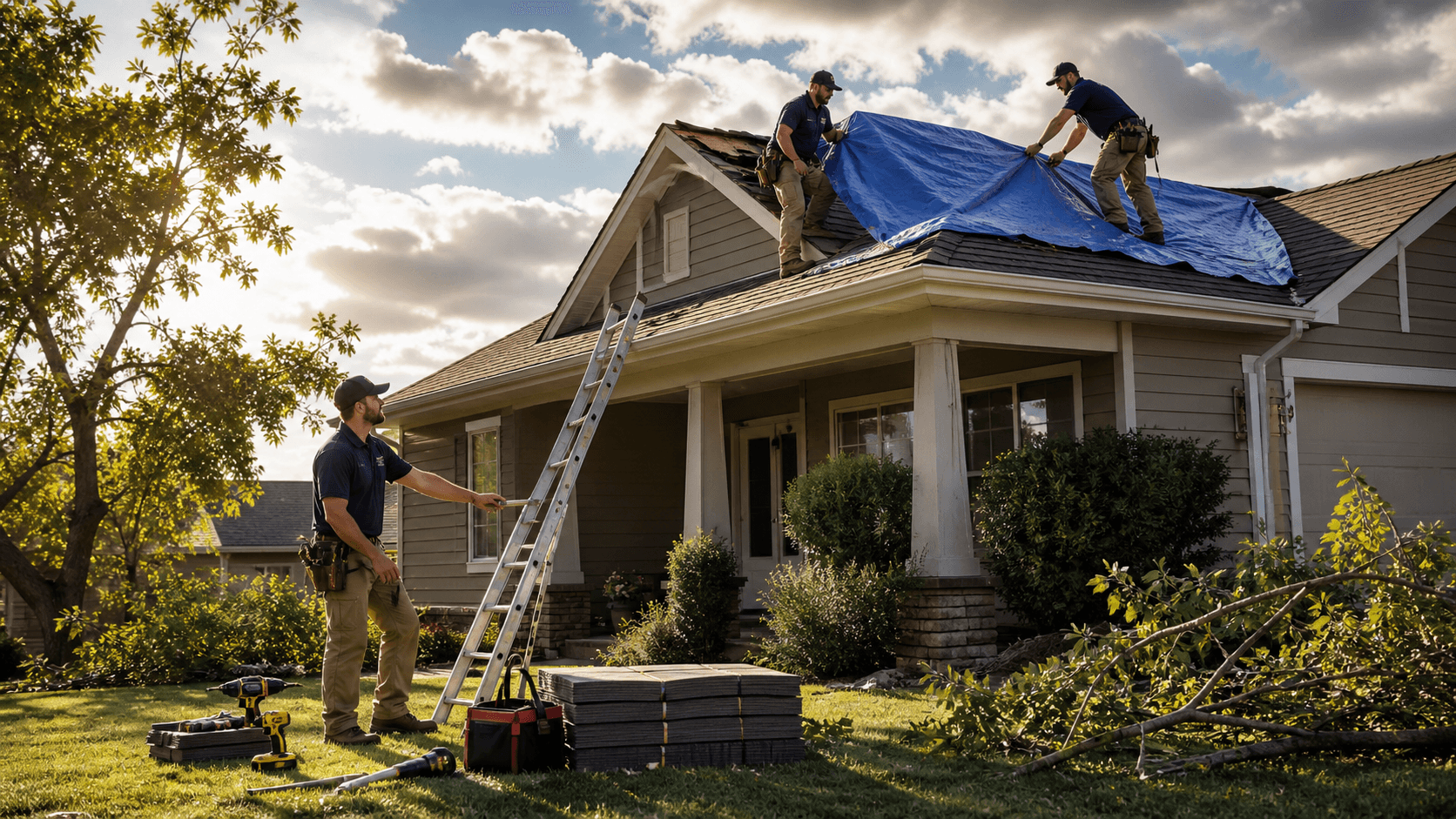
Late-Summer Storms Do Not Wait. Your Roof Cannot Either
Late-summer and early fall in Rapid City and the Black Hills can switch from calm to harsh very fast. One hour the sky is clear, the next you have hail, sudden downpours, and strong wind pushing through the hills. Those fast-moving storms hit roofs hard, and they do not care if you feel ready for them or not.
Storm damage that shows up toward the end of summer is extra risky. Colder, harsher weather is not far behind, and any weak spot in your roof can turn into a serious leak once fall rain and early snow come in. Quick action and a trusted emergency roof repair service often mean the difference between a simple fix on the outside and major damage inside your home. As a local licensed roofing and construction team, we understand how Black Hills weather behaves and how important it is to respond fast when your roof is in trouble.
How Late-Summer Storms Damage Your Roof
Hail and high wind can hit your roof from several angles at once. Even if the roof does not look destroyed from the street, it can be badly hurt.
Common storm damage problems include:
- Bruised, cracked, or broken shingles
- Missing shingles or lifted shingle edges
- Bent or loose flashing around chimneys and walls
- Damaged sealant around vents, skylights, and pipes
Some of the worst damage is not easy to see. What looks like a simple scuff in the shingles can actually be hail bruising that weakens the shingle surface. Wind can lift shingles just enough to break the seal, which lets water slip underneath the next time it rains.
"Invisible" storm damage often includes:
- Granule loss that exposes the shingle base to sun and water
- Tiny punctures that let moisture seep in slowly
- Loosened flashing that only leaks when rain hits from a certain direction
When this kind of damage happens late in the summer, it sets up problems for the rest of the year. Small openings let water reach the roof deck and insulation. As temperatures drop, that trapped moisture can lead to mold, stained ceilings, and even ice dams along the edges of the roof. What starts as a few hail hits in August can turn into bubbling paint, wet insulation, and roof structure problems by the time winter storms roll in.
Signs You Need Emergency Roof Repair Service Now
Some warning signs after a storm mean you should not wait. If you notice any of these, it is time for emergency roof repair service, not a "wait and see" approach.
Inside your home or building, watch for:
- Active dripping or running water from the ceiling or light fixtures
- New water stains on ceilings or upper walls
- Damp or musty smells in the attic or top floor
- Visible daylight shining through roof boards in the attic
- Sagging spots in ceilings or along the roofline
Outside, even a quick walk around the property can show storm damage, such as:
- Shingle pieces or whole shingles in the yard
- Dark piles of roof granules in gutters or at downspout ends
- Dented metal vents, gutters, or roof caps from hail
- Cracked or chipped skylight glass
- Obvious impact marks on the roof surface where branches or debris hit
A small leak almost never stays small for long. Water travels, so moisture that starts near a roof vent can end up staining a hallway ceiling or getting into an electrical box. If leaks are not handled by a professional, you might face: soaked drywall, warped flooring, damaged insulation, and mold growth that spreads behind walls and into the attic. That is why taking action quickly with an emergency roof repair service is so important after a strong late-summer storm.
What to Do Immediately After a Severe Storm
Right after a storm, safety comes first. Roofs are slippery when wet, and hail and debris make them even more dangerous, so it is best to stay off the roof and leave climbing to professionals.
Here are some smart first steps:
- Watch for downed power lines and stay far away if you see any
- Check inside rooms and the attic with a flashlight instead of going on the roof
- Listen for dripping or the sound of water running inside walls
- Place buckets or towels under active drips to limit damage
Once you know everyone is safe, a simple post-storm checklist can help:
- Take photos and short videos of damage you can see safely from the ground
- Look at ceilings, corners, and upper walls for any new stains or bulges
- Check around windows and doors for new drafts or moisture
- Walk the yard for fallen shingles, metal flashing pieces, or other roof debris
Calling a local roofing pro quickly makes a big difference. After a major storm, schedules fill up fast. Reaching out early helps you get faster temporary protection like tarps or board-ups that stop more water from getting inside. It also gives you better support for any insurance claim, because a trained eye can document storm damage clearly and explain what needs to be repaired or replaced.
How RainTite Handles Emergency Roof Repairs in Rapid City
When a storm hits, you should not have to wonder what to do next. Our emergency roof repair process is designed to move fast while keeping things clear and simple for you.
Here is how we handle it:
- Quick scheduling so we can get eyes on the damage as soon as possible
- On-site roof inspection to find both obvious and hidden storm issues
- Immediate temporary protection to stop active leaks and shield exposed areas
- A clear plan for repair or replacement based on what we find
Because we work in Rapid City and throughout the Black Hills, we know the roof styles common in this area and how local weather tends to behave. That helps us spot storm patterns and weak points that might be easy to miss. We are also familiar with local building codes and the kinds of storm-related questions insurance adjusters often ask, which can make the whole process smoother for you.
For homeowners, fast emergency roof repair protects your living space, your belongings, and your peace of mind before cooler, wetter weather settles in. For business owners, it helps limit downtime, protects inventory and equipment, and keeps customers and staff comfortable and safe while repairs are made.
Protect Your Home Before the Next Storm Hits
You do not have to wait for the next round of hail to find out how your roof is doing. A post-storm or end-of-summer roof inspection can catch small problems from earlier weather before they grow into leaks and ice issues later in the year.
Some simple proactive steps include:
- Keeping gutters and downspouts clear so water can flow off the roof
- Making sure attic ventilation is working so moisture does not get trapped
- Trimming back overhanging branches that could fall on the roof in high wind
- Having older roofs checked, especially if they have already been through several storm seasons
At RainTite Roofing & Construction, we provide residential and commercial roof installation, repair, and replacement, along with siding and window services, across the Rapid City and Black Hills area. A strong roof works together with solid siding and secure windows to shield your home or business from late-summer storms, fall rain, and winter weather. By taking action early and addressing damage quickly, you give your property the best chance to stay dry, safe, and ready for whatever the next storm brings.
Protect Your Home With Fast, Reliable Roof Repairs Today
When a storm or sudden leak puts your home at risk, you should not have to wait for help. At RainTite Roofing & Construction, we provide prompt, professional emergency roof repair service to secure your property and prevent further damage. Reach out now and we will assess the issue, explain your options clearly, and get to work quickly. To schedule urgent help or ask questions, simply contact us.